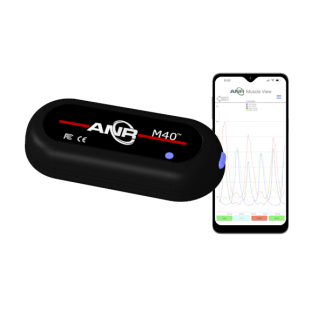
Electromyography (EMG) sensing technology and nerve conduction studies have a long history of success diagnosing neurological disorders. Now with affordable wearable EMG sensors, other applications are emerging such as: biofeedback, PT/OT rehabilitation, performance and excercise training, robot control, augmented reality ...
We try to watch for interesting articles. Please enjoy.
This study evaluated muscle synergies and coactivation patterns as indicators of neuromuscular coordination in lower-limb across three power levels of cycling. The Coactivation Index (CI), Synergy Index (SI), and Synergy Coordination Index (SCI) were calculated to assess muscle coordination patterns. These findings provide insight into how the central nervous system modulates its response to increasing mechanical demands. Combining synergy and coactivation indices offers a promising approach to assess motor control, inform rehabilitation, and optimize performance in cycling tasks.
“Quantifying lower-limb muscle coordination during cycling using electromyography-informed muscle synergies“; Ahmadi, Reza & Rasoulian, Shahram & Heidary, Hamidreza & Aboodarda, Saied & Uchida, Thomas & Herzog, Walter & Komeili, Amin. (2025). 10.48550/arXiv.2507.19637.
This is a pilot randomized controlled trial comparing conventional physical therapy with additional in-bed self-exercises based on electromyography sensor feedback and conventional physical therapy alone. Biofeedback using wearable sensors may provide opportunities for patients with stroke to effectively guide self-exercises with monitoring of muscular activities in hemiplegic lower limbs. This study aims to explore the feasibility and safety of in-bed self-exercises based on electromyography sensor feedback in patients with subacute stroke.
Read the article by Jung Hyun Kim, Byung-Mo Oh, Han Gil Seo, Sung Eun Hyun, Jong tae Han, Dae hee Kang, Woo Hyung Lee (December 30, 2024) https://doi.org/10.1371/journal.pone.0310178
This study used EMG data to analyze biomechanics in those affected by knee osteoarthritis (OA) in the Journal of Electromyography and Kinesiology, Volume 75, April 2024. By: Sarah Remedios, Derek Rutherford
Surface electromyography was used to compare knee joint muscle activity during gait between the contralateral limb of individuals with knee osteoarthritis (OA) and an asymptomatic older adult group. The findings highlight the importance of exploring the implications of contralateral knee function of individuals with moderate knee OA, particularly considering the altered antagonist muscle activations, and heightened frontal plane moments.
This article published in Medical News Today describes a study showing how yoga could be an effective therapy for chronic low back pain. Electromyography was used to show muscular bioelectric activity in the lower back (which is associated with back pain) also improved.
Specifically, scientists looked at the flexion-relaxation phenomenon, which is a clinical tool to assess back pain. When someone bends forward, as if to touch their toes, this movement is known as trunk flexion. During flexion, the muscles of the lower back are engaged. However, at a certain point in the flexion, the muscles actually begin to relax again. How much the muscles are engaged or relaxed during this process can be measured through electromyography. Higher readings indicate more muscle tension which is associated with the risk of low back pain.
“Muscles in Action” by Mia Chiquier and Carl Vondrick, Columbia University. Using ANR M40 Muscle Sense sensors to create a bidirectional representation that predicts muscle activation from video, and conversely, reconstructs motion from muscle activation. In Proceedings of the IEEE/CVF International Conference on Computer Vision, October 2023.
Open Access versions, provided by the Computer Vision Foundation