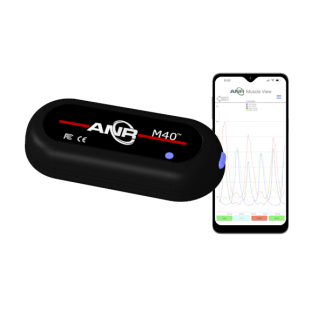
Electromyography (EMG) sensing technology and nerve conduction studies have a long history of success diagnosing neurological disorders. Now with affordable wearable EMG sensors, other applications are emerging such as: biofeedback, PT/OT rehabilitation, performance and excercise training, robot control, augmented reality ...
We try to watch for interesting articles. Please enjoy.
This study used EMG data to analyze biomechanics in those affected by knee osteoarthritis (OA) in the Journal of Electromyography and Kinesiology, Volume 75, April 2024. By: Sarah Remedios, Derek Rutherford
Surface electromyography was used to compare knee joint muscle activity during gait between the contralateral limb of individuals with knee osteoarthritis (OA) and an asymptomatic older adult group. The findings highlight the importance of exploring the implications of contralateral knee function of individuals with moderate knee OA, particularly considering the altered antagonist muscle activations, and heightened frontal plane moments.
This article published in Medical News Today describes a study showing how yoga could be an effective therapy for chronic low back pain. Electromyography was used to show muscular bioelectric activity in the lower back (which is associated with back pain) also improved.
Specifically, scientists looked at the flexion-relaxation phenomenon, which is a clinical tool to assess back pain. When someone bends forward, as if to touch their toes, this movement is known as trunk flexion. During flexion, the muscles of the lower back are engaged. However, at a certain point in the flexion, the muscles actually begin to relax again. How much the muscles are engaged or relaxed during this process can be measured through electromyography. Higher readings indicate more muscle tension which is associated with the risk of low back pain.